On Pluralism
Before we can unite, and in order to unite, we must first of all draw firm and definite lines of demarcation. Otherwise, our unity will be merely a pretext, a screen for the existing disarray, and a hindrance to any real progress.”
— Lenin, Declaration of the Editorial Board of Iskra (September 1900)
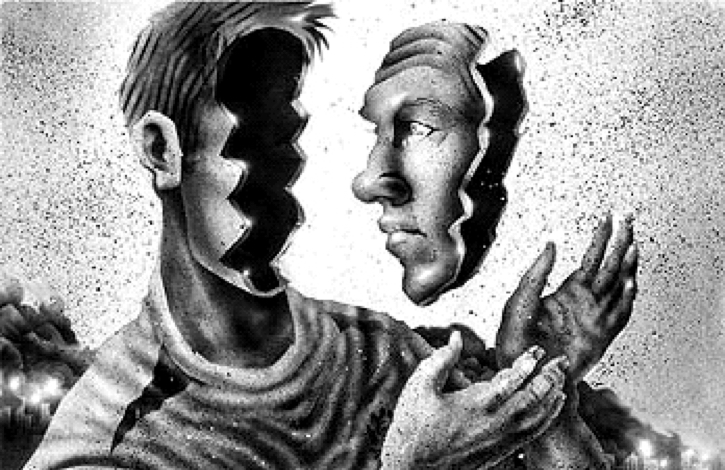
In the current murky atmosphere of politics, particularly regarding recent events in Iran, concepts such as “pluralism” and “diversity of opinion” have become the constant refrain of right-wing and petty-bourgeois forces.{1} With an air of composed rationality, they speak of “pluralism” as if truth were a piece of wax that anyone is free to mold into whatever shape they desire or deem correct. However, this approach is precisely the deviation that Lenin warned against in Materialism and Empirio-criticism. There, Lenin argued that truth is a reflection of the material world. And since the material world exists independently of our minds and is governed by fixed, objective laws, the truth derived from it cannot be multiple. In other words, while it is one thing for every individual to interpret the world through their own lens, it is quite another that the objective world around us possesses its own determinate and concrete facets. Therefore contrary to the views of those{2} who—by drawing on the mystical allegory of truth as a shattered mirror held by all—seek to move from a “plurality of opinions” to a “plurality of truth”, it must be said: while there can indeed be diverse perspectives on truth, this diversity does not testify to a plurality of truth itself. Rather, it merely indicates the proximity or distance of a given perspective to the truth. In other words, our lack of awareness regarding a phenomenon, or our subjective definition of it, does not alter the existential truth of the phenomenon itself.
In truth, the proponents of this view commit a transparent fallacy by extending the mystical concept of the “Unity of Existence” into the realm of “social relations.” They are fundamentally incapable of grasping that society is not the manifestation of a divine, transcendent whole in which everyone holds a share of the truth; rather, society is the terrestrial arena of irreconcilable class contradictions. In other words, the truth of history and human society is not an eternal, primordial mirror that has been shattered into pieces held by you, me, and the other; rather, truth is a material and determinate reality that is discovered through the crucible of praxis and class struggle.
Of course, dialectical materialism contains an element of relativism—in the sense that it acknowledges we can only ever approximate the truth, never reaching an “absolute truth.” Since existence is in constant flux, an “absolute truth” in the sense of a fixed and immutable reality simply does not exist to be known once and for all. However, dialectical materialism does not collapse into relativism or agnosticism. This means that while it accepts that the boundaries of our knowledge of objective reality are conditional and relative, this does not negate the independent and concrete existence of objective reality itself, nor does it deny the possibility of knowing it.
In my view, the first step toward both understanding and resolving this theoretical confusion is to return to the Leninist principle that “truth is always concrete.” That is to say, truth is not something to be extracted as a mere amalgamation or an average of a collection of contradictory opinions. The truth of a society is a reflection of the concrete, objective relations that govern it. For instance, when we speak of poverty as a social phenomenon, we cannot simultaneously maintain that it results from the unjust distribution of wealth while also attributing it to divine providence, fate, or individual laziness.
In fact, by emphasizing “pluralism,” bourgeois and petty-bourgeois forces consciously attempt to deny the existence of a single, objective truth. Why? Because the recognition of a concrete truth precludes ambiguity and confusion. When they speak of a plurality of opinions, they seek to obscure the reality that at any specific historical juncture, there is only one path leading to genuine liberation; all other paths are either diversions or loops within the current vortex that ultimately sink into the quagmire of existing relations. When communists persist in emphasizing this reality, the Right accuses them of claiming “exclusive ownership of the truth.” However, from an epistemological standpoint, this accusation lacks any theoretical validity; for the Left does not view truth as subservient to itself, but rather subordinates itself to the truth. Consequently, it does not regard itself, but rather truth itself as singular. To return to the previous example: one cannot simultaneously attribute poverty to unjust socio-economic relations while ascribing it to divine providence or similar notions.
Neither divine providence, luck, nor laziness can explain poverty as a social phenomenon. While individual cases of economic failure might be attributed to luck or personal habits, these factors fail to explain the root causes of systemic poverty. We must look for the fundamental drivers that not only produce poverty but also perpetuate it. Truly, how can one explain the poverty and destitution of billions of people worldwide through mere luck or laziness?! The world”s poorest and most deprived are the very workers who create its immense wealth; their grueling poverty cannot be explained away by luck or laziness, let alone by divine providence.
Yet another bourgeois sleight of hand and deception—and a primary arena for petty-bourgeois self-delusion—can be observed in the approach to the category of “democracy.” They frame and peddle democracy as the polar opposite of “dictatorship,” whereas, from the perspective of historical materialism, these two concepts are inseparable and intertwined. In reality, democracy and dictatorship are two sides of the same coin of class relations in society.
The reality is that every form of social democracy is, at its core, a specific form of class dictatorship. Therefore, democracy does not necessarily imply pluralism, nor does dictatorship necessarily signify autocracy. The claim of having a “supra-class” or “non-ideological” democracy that encompasses all truths is a brazen idealistic fallacy. What constitutes “democracy” for the ruling bourgeoisie and the owners of capital is, for the oppressed classes, nothing but the naked economic and political “dictatorship” of the ruling class. This class-based understanding of democracy is the “missing link” that the right-wing opposition is neither capable of grasping nor, fundamentally, interested in accepting, as it does not serve their interests. Right-wing forces deliberately contrast democracy with dictatorship to obscure the class nature of the state. They crave an abstract democracy; one so abstract that it can be presented as the antithesis of “dictatorship,” thereby concealing the reality of exploitation and class oppression behind vapid, subjective debates or the bureaucratic spectacles of the ballot box. These are the same ballot boxes where—at best, in the words of Marx—the oppressed are allowed once every few years to decide which particular representatives of the oppressing class are to represent and repress them in parliament. We witness this in all elections conducted within the framework of bourgeois democracies, of every stripe. The “ballot box,” especially in the current global climate, increasingly resembles a magician”s hat from which any manner of beast may spring forth. After all, did the farce of Trump or “Trumpism” not emerge from the depths of these very same ballot boxes?!{3}
These are merely verbal gymnastics and demagogic ploys resorted to by right-wing currents and short-sighted individuals. To put an end to such games—and specifically to halt the galloping horse of “pluralism”—one must bring forth that fundamental and decisive touchstone which these currents either entirely evade or attempt to gloss over with a handful of bourgeois drivel and historical distortions. That essential touchstone is the relationship between democracy and the relations of production and the distribution of wealth in society.
In truth, anyone who speaks of democracy and freedom in the political arena must, first and foremost, clarify their position regarding the form and method of organizing society”s economic relations. Without this transparency, democracy is merely a word and a theoretical abstraction—a hollow, fluid, and malleable abstraction. One cannot speak of “democracy” and the “survival of capitalism” at the same time; one cannot advocate for “workers” rights” while simultaneously calling for the “security of capital.” We are not faced with two sets of truths here, but with one objective reality: the irreconcilable contradiction between irreconcilable class interests. Any attempt to “reconcile” these contradictions under the umbrella of pluralism is to succumb to idealistic illusions—the belief that by merely changing words, the objective reality of exploitation can be altered. Those who speak of democracy while insisting on market logic and the preservation of existing capitalist relations are, in fact, calling for the perpetuation of dominant bourgeois relations and, by extension, the continued dictatorship of capital. Conversely, a genuine people”s democracy begins not in parliament, but with the expropriation of a parasitic minority”s private ownership over the labor and livelihood of the majority, and with workers” control over the production and distribution of social wealth. The moment we pose the fundamental question—”In whose hands is the social wealth?”—we will see all that alleged “pluralism” collapse, and the real class battle lines will be revealed.
The reality is that plurality of opinions here essentially signifies an attempt to consolidate tendencies and viewpoints that are inherently compatible and reconcilable. In fact, the pluralism envisioned by initiatives like the “Iran Freedom Congress”—and what is achievable within such a framework—is the gathering of individuals and forces who do not possess antagonistic interests or antithetical worldviews (as that would render the effort logically meaningless and invalid), but who may certainly have differing interests and divergent views; in other words, “plurality of opinions.”
In this sense, a feminist like Mahdieh Golroo can, of course, sit alongside an “entrepreneur” like Majid Zamani. Likewise, an infamous former Hezbollahi turned secular republican like Mohsen Makhmalbaf can certainly stand beside a seasoned, political technocrat like “Confidant of the Realm” Shahriar Ahy. There is nothing strange about this assembly. A few years ago, we witnessed the “World Liberty Congress” featuring the likes of Masih Alinejad; now we see the “Iran Freedom Congress.” Why not?
In the absence of a viable, organized revolutionary force capable of taking the offensive, one can certainly stage a comedy of “pluralism” in the name of the Iranian people, or celebrate the “audience” granted to a handful of ramshackle, renegades known as “leftist” “intellectuals” and release balloons to mark the auspicious emergence of the “sensible left.” One could even flaunt the chants of “Long Live the Shah” and the sight of monarchist flags in universities in the face of the leftist opposition, blaring through the megaphones of infamous media outlets and the shambles of social media that “the leftist stronghold has been conquered!” All of this is possible because we lack an organized revolutionary force within the heart of society—a force capable of channeling and organizing the existing combative energy of the masses toward the correct path of change: a social revolution. Our people lack this, and this is the deadly omission of their struggles.
Furthermore, Leftist and communist forces are frequently accused of viewing issues through an ideological lens and falling into sectarianism due to their insistence on a “socialist solution.” However, this is nothing more than a baseless accusation and an spurious label. The communists” steadfast commitment to—and defense of—a genuine alternative does not constitute the “exclusion” of others; just as right-wing forces naturally believe their own solutions to be correct and logical. Therefore, the problem lies in the substance of the solution itself, not in the act of proposing it.
In other words, the Left”s fundamental conflict with right-wing tendencies is rooted in the conviction that the Right”s solutions lead nowhere but back into the current quagmire.{4} Here, we are not faced with a “plurality of horizons,” but with a historical necessity: either a social revolution—a total transformation of economic, political, and cultural relations—or a relapse into a system where only the names or the “guises” of the administrators have changed. In this context, the petty bourgeoisie, due to its precarious class position, is perpetually terrified of such clarity and labels it “dogmatism”; they often employ a chameleon-like rhetoric in pursuit of “class conciliation.” However, the struggle of the majority against the bourgeoisie and capitalist relations is an arena of irreconcilable class conflict. Therefore, from the perspective of the Left, forming a “coalition,” “bloc,” or “congress” with the Right—and worst of all, with the far-right and the camp of the foul-mouthed reactionaries—is neither possible nor worthy of the people whom the Left is meant to represent. Based on their respective goals and ideals, these two sides are fundamentally irreconcilable, and any attempt to obscure this reality under any pretext is a distortion of the truth and remains utterly reprehensible.
The people know their own suffering; they grapple with it every single moment. The core issue, however, lies in understanding the mechanism that generates this suffering. The fundamental duty is to explain and constantly reiterate why this system systematically establishes and perpetuates poverty and dictatorship.
It must be demonstrated that as long as the relations of production and wealth distribution in society are not transformed, no change in the form of government—be it a monarchy or a liberal republic—can alter the horrific conditions of the masses. The essential task of the Left is to emphasize this point within the political discourse of society.
There is no other way. Democracy without a socialist orientation is a wild-goose chase designed to divert the rage of the downtrodden. Truth is concrete, the enemy is clear, and liberation lies solely in the overthrow of existing economic relations. Anything else is a deception intended to preserve the interests of the ruling class—whether in its ‘shepherd-and-flock’ and ‘Crown-worshiping’ brand.
A. Behrang
February 29, 2026
Notes:
{1} While discussing pluralism is a general necessity— and one could identify various forms of it within socio-political discourses and critique them from multiple perspectives— what prompted me to write this piece were three specific events or issues: First, the meeting of two so-called “Leftists” with Reza Pahlavi and their promotion of the “Rational Left” facade. Second, the holding of the “Iran Freedom Congress” and the comedy of their “acceptance of pluralism.” And third, hearing monarchist slogans and seeing their flags in Iranian universities, alongside claims by the far-right of having captured the Left”s strongholds. Here, I will focus on the second case: the “Iran Freedom Congress” and the farce of their “commitment to pluralism”.
{2} A reference to a Pulse Media conversation featuring Mohsen Makhmalbaf, Majid Zamani, and Mahdieh Golroo regarding the “Iran Freedom Congress”.
{3} It must be clarified, of course, that it is not the ballot box or elections themselves that are in dispute here. Rather, the point of contention is the reliance on these mechanisms under conditions where immense wealth and power are concentrated in the hands of a corrupt, exploitative minority—a leech-like elite that is now, especially thanks to modern technological advancements, more capable than ever of molding public opinion and orchestrating various deceptions and frauds within electoral processes.
{4} When we speak of the ‘Left’ here, we specifically mean the ‘Revolutionary Left’—that is, the communists.

You May Also Like
A few Speeches by J. Stalin
A Look at the Last Letters Exchanged Between Antonio Gramsci and Palmiro Togliatti
